
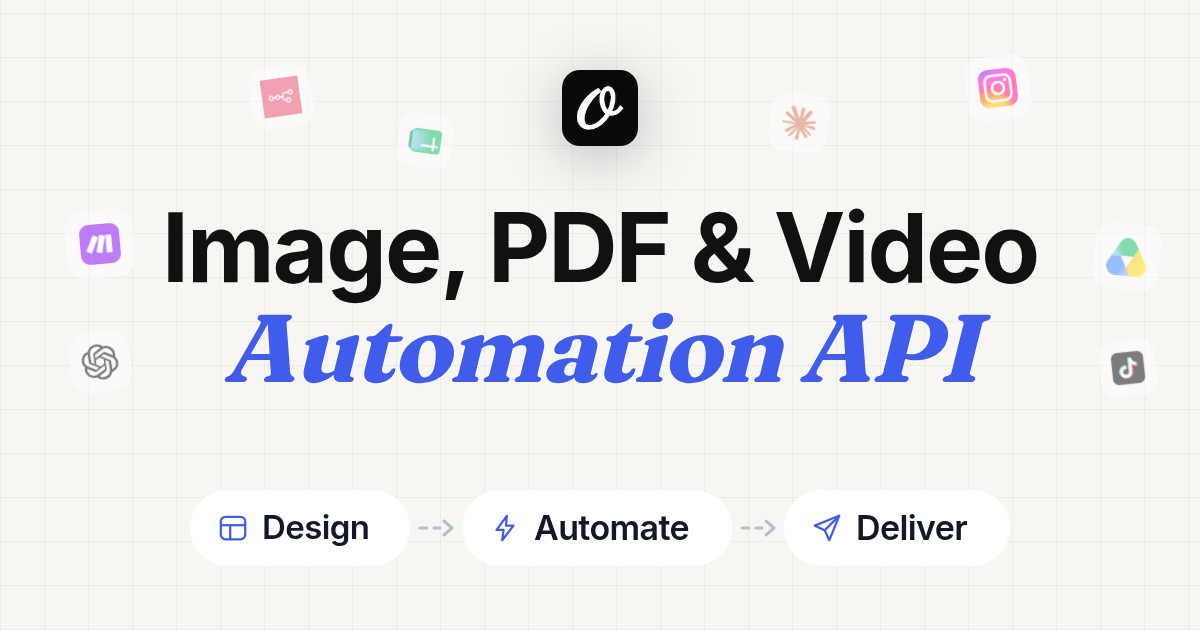
Orshot is a template-based rendering service that generates images, PDFs and videos from data. Developers, automation builders and marketers trigger it through a REST API, no-code tools or AI agents.
What is Orshot?
A template is designed once in the Orshot editor, or imported from Canva or Figma. Each text, image and color layer can then be changed per render. A render is triggered with a POST request to the studio render endpoint carrying a template ID and a set of modifications. The response comes back as a URL or file in formats such as PNG, JPG, WebP, PDF or MP4.
Renders can also run from workflows that read rows from Google Sheets or Airtable, or from webhooks, n8n, Make and Zapier. Output can be delivered to a backend, storage or social accounts on 15+ platforms, including Instagram, LinkedIn, TikTok and X. A remote MCP server lets agents in Claude, Cursor or ChatGPT create templates and run renders. The site also lists logs, failure alerts, workspaces, roles and bring-your-own storage.
Who is Orshot for?
Suits developers who need generated images, invoices or certificates from their own stack, and automation builders wiring renders into n8n, Make or Zapier. Marketers producing many post variations from a spreadsheet also fit. SaaS teams can embed the editor in their own product. The site states it is not for scraping or impersonating other brands.
Highlights
- REST API with SDKs for Node.js, Python, PHP and Ruby
- Connectors for n8n, Make, Zapier, Google Sheets and Airtable
- Remote MCP server for Claude, Cursor, ChatGPT and other agents
- Imports templates from Canva and Figma
- Publishes renders to social platforms (paid add-on)
- Embeddable white-label design editor with React and Vue components
How much does Orshot cost?
Freemium. A free plan includes 100 credits a month with no card. Orshot Embed starts from $39 a month, and the embedded editor for end users starts from $160 a month for up to 1,500 end users. Video rendering and social publishing are paid features.